



Mead (hydromel in French, from the Greek and then Latin words for water and honey) is one of the first alcoholic drinks ever made by humans.
Video: how mead is made
A drink from Antiquity
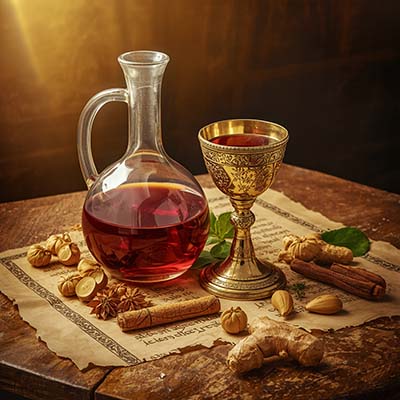
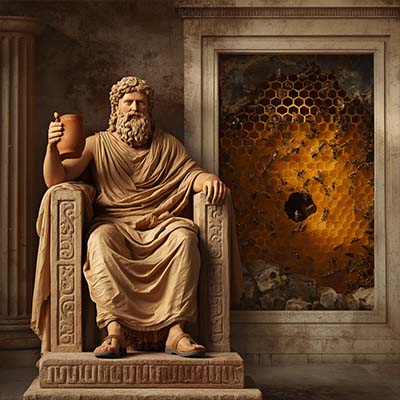
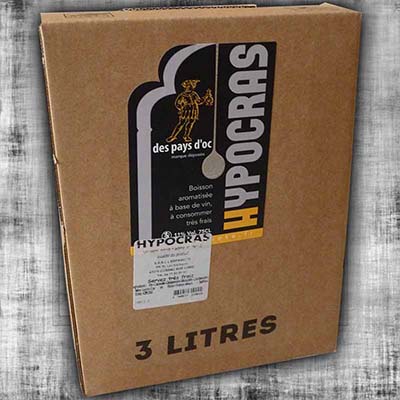
Widespread among the ancient Greeks, then the Romans, the Gauls and the Nordic peoples such as the Vikings, mead was overtaken around the 13th century by hypocras.
The recipe: water, honey and yeast
The recipe for mead is simple: water, honey and yeast. The yeasts can be indigenous (naturally present in the honey) or added to the mixture.
During fermentation, the yeasts consume the honey and turn it into alcohol. It is the same process as in winemaking, where the sugar in grapes becomes alcohol.
Honey: the source of taste and strength
 It is the honey that gives mead its taste. The choice of honey (or honeys) and the quantity used determine its alcohol content, flavour and sweetness.
Stronger than wine?
Unlike grapes, which naturally reach a maximum sugar level, water can be saturated with honey, producing a mead stronger than wine. About 70% of the honey in the water, honey and yeast mixture can ferment into alcohol.
Dry, medium-dry, sweet or very sweet
Knowing this, the mead maker knows how much honey to use to obtain the mead he wants. Whether it is dry or sweet depends on the 30% of sugar left at the end of the process:
- dry: 0 to 10 g/l of residual sugar;
- medium-dry: 10 to 20 g/l;
- sweet or mellow: 20 to 40 g/l;
- very sweet (liquoreux): 40 to 60 g/l.
Where the honey comes from
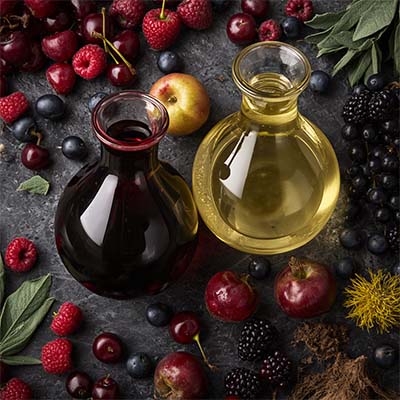
The other way to give mead a more or less pronounced taste is the origin of the honey: lavender honey does not taste like acacia honey. Using a single honey or a blend gives each mead its character. Some beekeepers even work their meads like wines, blending different honeys as winemakers blend different grape varieties.
Simple in appearance, but delicate to make
Simple as it seems, making a quality mead is a delicate process. It takes time and goes through several stages: controlled fermentation, stabilisation by filtration (which limits the use of sulphites), ageing and clarification.
Some beekeepers even work with specialised laboratories, where oenologists and agronomists support them throughout the process: they advise on honey blends and closely monitor each stage, to produce a true nectar of the gods!
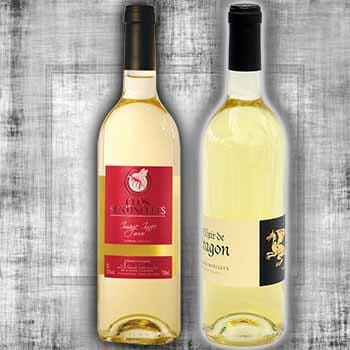
This is the case for our Clos des Sentinelles meads from Occitania. To choose among all our cuvées, from dry to sweet, read our guide Choosing your mead.